How to Wash a Silk Pillowcase Without Ruining It
Silk pillowcases are a great investment for your hair and skin — but washing them can feel nerve-wrackSilk pillowcases are a great investment for your hair and skin — but washing them can feel nerve-wracking. Fortunately, it’s absolutely doable at home if you know the rules. In this guide, you’ll learn how to wash a silk pillowcase safely, what products to use, and most importantly, the common mistakes to avoid.
Why Silk Pillowcases Need Special Care
Silk is a natural protein fiber — which is exactly why it’s so gentle on hair and skin. But those same properties make it more delicate than cotton or linen. Silk is sensitive to:
Heat — hot water breaks down the protein structure, causing shrinkage and stiffness
Harsh chemicals — regular detergents and bleach strip silk’s natural shine
Agitation — rough machine cycles weaken and dull the fibers
Direct sunlight — UV rays yellow and degrade silk quickly
Once you understand what silk needs, washing it becomes second nature.

What You’ll Need Before You Start
For hand washing:
Clean sink or basin
Cold water (below 86°F / 30°C)
Delicate or silk-specific detergent
Clean dry towel and flat drying surface
For machine washing:
Mesh laundry bag
Delicate detergent
Washing machine with delicate/hand wash cycle
Recommended detergents:
Woolite Delicates
Perwoll Silk & Wool
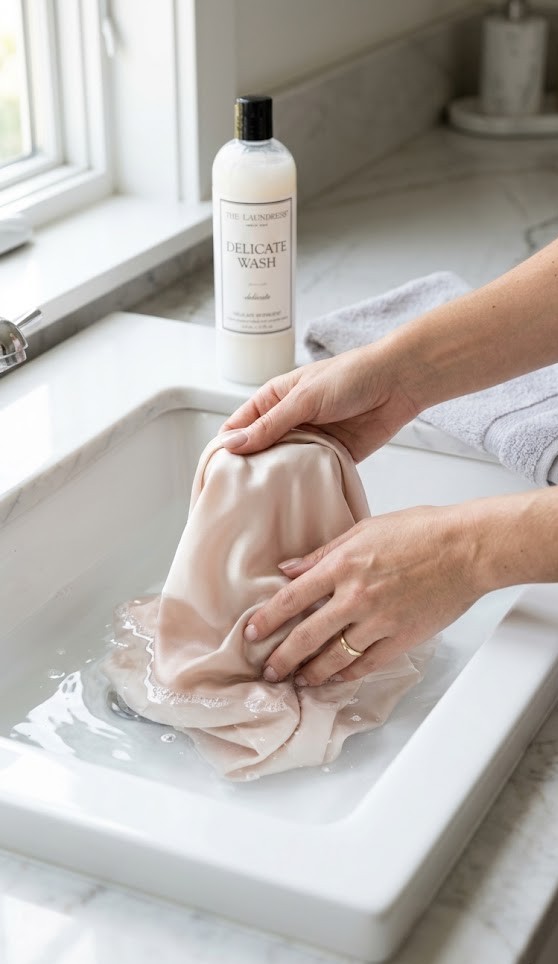
The Laundress Delicate Wash
Baby shampoo — great emergency alternative
Avoid: regular detergent, enzyme-based detergents, bleaching agents, and fabric softeners.
Method 1: Hand Washing (Recommended)
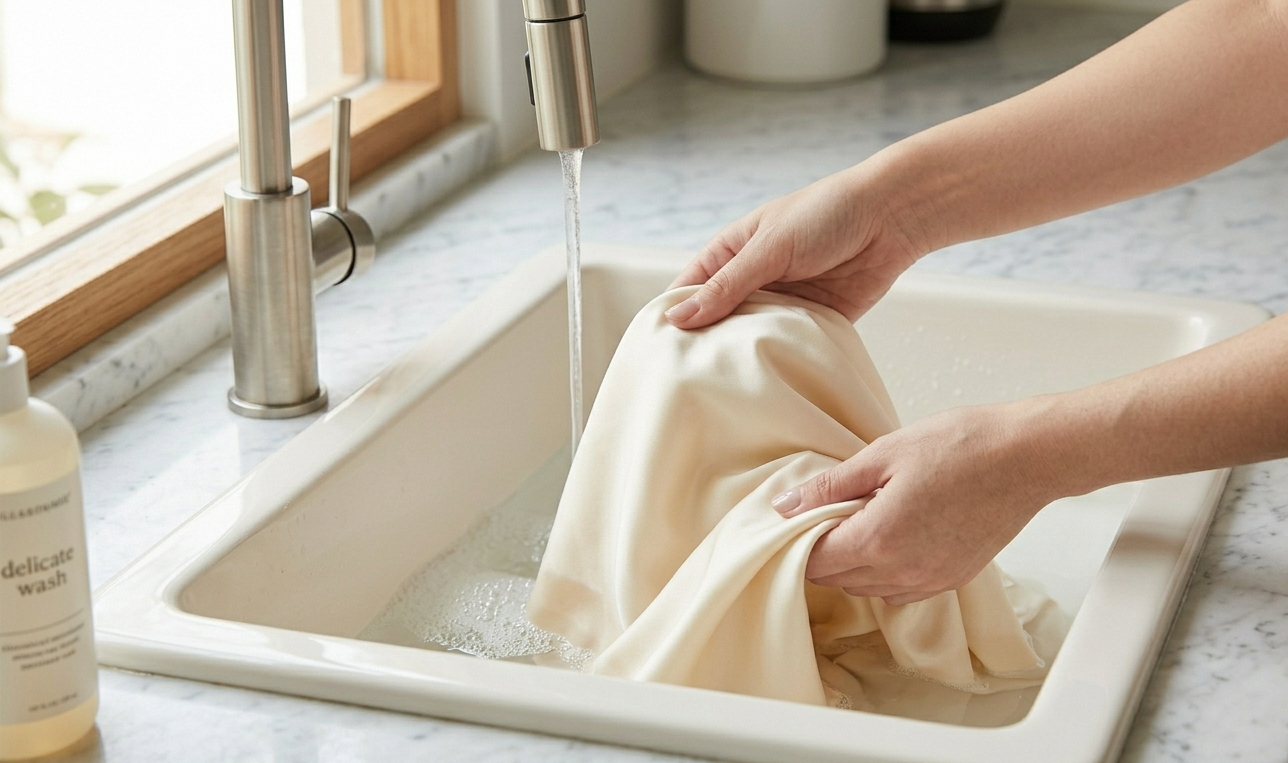
Hand washing is the gold standard for silk pillowcases. It gives you full control over temperature and agitation, and it’s the method most likely to preserve your pillowcase’s quality over time.
Step 1: Fill your basin with cold water
Use the coldest water from your tap. Room temperature is fine; never use warm or hot water. Cold water protects the silk fibers and prevents shrinkage.
Step 2: Add a small amount of delicate detergent
Less is more with silk. Add roughly half a teaspoon of delicate detergent to the basin and swirl gently to dissolve. Using too much detergent makes rinsing difficult and can leave residue that stiffens the fabric.
Step 3: Submerge the pillowcase
Turn the pillowcase inside out before placing it in the water. This protects the outer surface — the side that touches your face — from any friction during washing. Gently press it into the water until it’s fully submerged.
Step 4: Wash gently for 3–5 minutes
Swirl the pillowcase slowly and gently through the water. Do not scrub, wring, or rub the fabric against itself. If there’s a specific stain, hold the fabric underwater and use your fingertips to gently work the detergent into the area. Never use a brush.
Step 5: Rinse thoroughly
Drain the soapy water and refill with fresh cold water. Gently press the pillowcase through the water to rinse. Repeat until the water runs completely clear and there are no traces of detergent. This usually takes 2–3 rinses.
Step 6: Remove excess water — gently
Never wring silk. Instead, lift the pillowcase out of the water and gently press it against the side of the basin to remove excess water. Then lay it flat on a clean, dry towel and roll the towel up loosely, pressing gently to absorb more moisture.
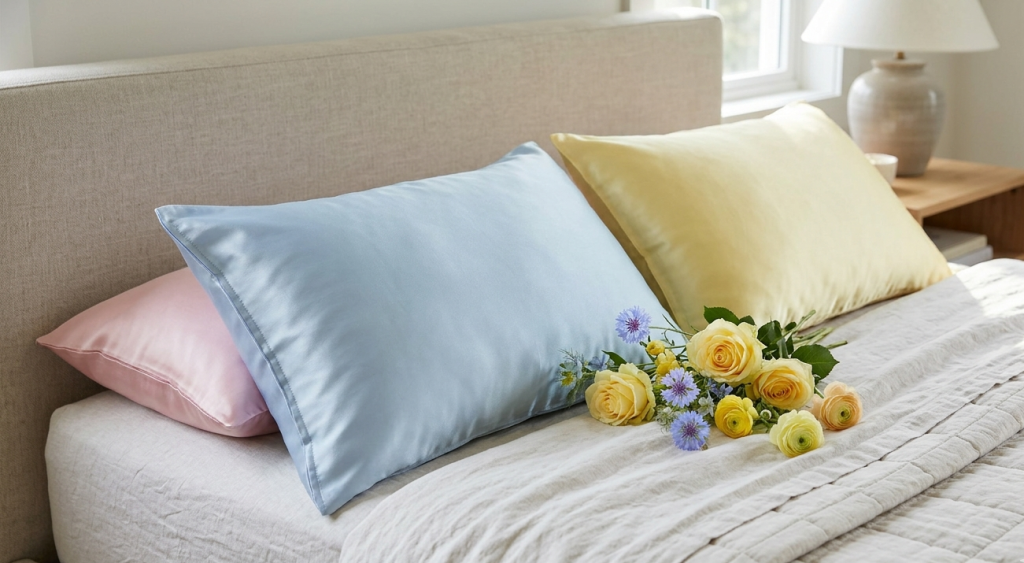
Method 2: Machine Washing a Silk Pillowcase
Yes, you can machine wash a silk pillowcase — but only under the right conditions. Specifically, if your washing machine has a dedicated silk or hand wash cycle, and you take a few precautions, machine washing can be both safe and convenient.
Step 1: Use a mesh laundry bag
This is non-negotiable. A mesh laundry bag prevents the pillowcase from snagging, stretching, or rubbing against other items during the cycle. Place the pillowcase inside the bag before loading it into the machine.
Step 2: Wash alone or with other delicates
Never wash a silk pillowcase with jeans, towels, or anything with zips or hooks. The friction and weight will damage the silk fibers. If you’re washing multiple silk or delicate items, keep them together.
Step 3: Choose the right cycle
Select the delicate, hand wash, or silk cycle on your machine. If your machine doesn’t have these, skip machine washing and hand wash instead.
Step 4: Use cold water and a short spin
Set the temperature to cold (86°F / 30°C maximum). Choose the shortest spin cycle available — ideally under 600 RPM. High spin speeds stretch and damage silk fibers.
Step 5: Remove immediately
As soon as the cycle ends, immediately remove your pillowcase from the machine. Otherwise, leaving silk sitting wet causes creasing that’s difficult to remove, and can also create a musty smell.
How to Dry a Silk Pillowcase
Drying is just as important as washing. Getting this step wrong is one of the most common ways silk pillowcases are ruined.
Always air dry silk. Never put a silk pillowcase in the tumble dryer. The heat damages the protein fibers permanently, causing the fabric to stiffen, shrink, and lose its natural sheen.
How to air dry correctly:
- Lay the pillowcase flat on a clean, dry towel on a flat surface
- Gently smooth it into shape with your hands — no stretching or pulling
- Flip it over after an hour to ensure even drying
- Keep it away from direct sunlight, which yellows silk over time
- Keep it away from direct heat sources like radiators or heaters
Silk typically dries within 2–4 hours at room temperature. In humid conditions, it may take longer — make sure the room is well-ventilated.
If you need to remove wrinkles, use a cool iron on the lowest setting while the silk is still slightly damp, or use a fabric steamer held several inches away from the surface. Always iron on the reverse side.
Common Mistakes to Avoid
Even careful people make these mistakes. Knowing them in advance will save your silk pillowcase from unnecessary damage.
- Using hot water — the single most common mistake. Always use cold water
- Regular detergent — enzymes and harsh chemicals in regular detergents break down silk fibers
- Wringing or twisting — this distorts the weave permanently
- Tumble drying — heat is silk’s worst enemy
- Bleach or fabric softener — both destroy the natural silk coating
- Leaving it in direct sunlight to dry — causes yellowing and fiber degradation
- Washing too frequently — silk doesn’t need to be washed after every use (more on this below)
- Skipping the mesh bag for machine washing — leads to snagging and stretching
How Often Should You Wash a Silk Pillowcase?
Silk pillowcases don’t need to be washed as often as cotton ones. Over-washing is actually one of the most common reasons silk loses its quality prematurely.
A good rule of thumb:
- Weekly if you use skincare products, oils, or hair products before bed
- Every 1–2 weeks if you go to bed with clean, product-free hair and skin
Between washes, air your pillowcase out during the day by leaving it flat or hanging it in a well-ventilated room.
For a full guide on how often to wash different bedding items, check out our article: How Often Should You Wash Your Pillowcase?