How to Remove Yellow Stains from White Sheets
Fresh white sheets are satisfying — but yellow stains that won’t budge are frustrating. Most people reach for bleach, but chlorine bleach can actually make yellowing worse over time, weakening fibers permanently.
The good news? Gentler, more effective methods exist. In this guide, you’ll learn what causes yellow stains and how to remove them — using ingredients you already have at home.
What NOT to Use: The Chlorine Bleach Problem
Chlorine bleach seems like the obvious choice for white sheets — but it actually makes yellowing worse over time. It reacts with sweat residues and weakens cotton fibers, causing sheets to thin and yellow faster with each wash.
For occasional use on pure white cotton it’s acceptable, but as a regular treatment it’s counterproductive. Instead, use oxygen-based treatments and natural acids — they remove yellow stains without damaging your sheets.
What Causes Yellow Stains on White Sheets?
Before you treat a stain, it helps to understand what you’re dealing with. Most yellow stains come from these sources:
Sweat and body oils — The most common cause. Sweat proteins and salts oxidize over time, creating yellow stains — especially on pillows and areas with prolonged skin contact.
Skincare and hair products — Moisturizers, facial oils, and leave-in conditioners transfer to sheets during sleep and yellow when exposed to dryer heat.
Detergent buildup — Too much detergent leaves residue in fibers that yellows with repeated heat exposure, making sheets look dull and stiff.
Hard water minerals — Iron deposits from hard water cause uniform yellow or brownish discoloration across the sheet.
Age and oxidation — White fabric naturally yellows slightly over time, but proper washing habits can slow this significantly.
Method 1: Baking Soda + White Vinegar (Natural & Effective)
This is the most accessible method — most households already have both ingredients. Together, baking soda and white vinegar tackle stains, neutralize odors, and help restore whiteness without harsh chemicals.
What you need:
- ½ cup baking soda
- 1 cup white vinegar
- Your regular detergent
Steps:
- Place your sheets in the washing machine
- Add your regular detergent to the detergent drawer
- Add ½ cup of baking soda directly into the drum with the sheets
- Set the machine to the hottest cycle safe for your fabric (check the care label — most cotton sheets can handle 140°F / 60°C)
- Start the cycle
- When the machine reaches the rinse cycle, add 1 cup of white vinegar to the fabric softener drawer
- Complete the cycle and air dry
The baking soda works on the stain during the wash, while the vinegar in the rinse removes any remaining residue and brightens the fabric. Do not combine baking soda and vinegar before adding them — add them at different stages of the cycle.
Method 2: Oxygen Bleach Soak (Best for Stubborn Stains)
For yellow stains that have been set for a while — the kind that have survived multiple regular washes — an oxygen bleach soak is the most effective solution. Unlike chlorine bleach, oxygen bleach (also called sodium percarbonate) releases hydrogen peroxide when dissolved in water, which lifts stains without damaging fibers or causing further yellowing.
What you need:
- Oxygen bleach powder (OxiClean, Vanish Oxi Action, or similar)
- Warm water
- A basin or bathtub
Steps:
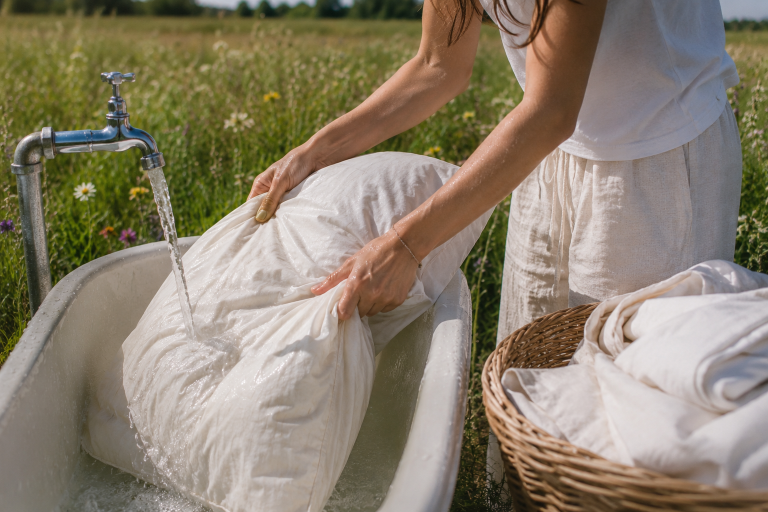
- Fill your basin or bathtub with warm water (not boiling — around 104°F / 40°C)
- Add the recommended amount of oxygen bleach powder according to the package instructions
- Stir to dissolve completely
- Submerge your sheets fully and press them down so all fabric is saturated
- Soak for a minimum of 2 hours — for stubborn stains, soak overnight (up to 8 hours)
- After soaking, wring out excess water and wash as normal in the machine
- Air dry and check results before putting in the dryer — heat sets stains
If stains are still visible after one treatment, repeat the soak before drying. Drying stained sheets in a dryer makes the stain significantly harder to remove in future washes.
Method 3: Lemon Juice + Sunlight (Gentle & Natural)
This method works best for light yellowing and general dullness rather than heavy, set-in stains. It’s the gentlest option and works beautifully for delicate fabrics.
What you need:
- Fresh lemon juice or bottled lemon juice
- Water
- Sunlight
Steps:
- Mix equal parts lemon juice and water in a spray bottle
- Lay the sheets flat on a clean surface outdoors or near a sunny window
- Spray the lemon juice mixture generously over the yellowed areas
- Leave in direct sunlight for 1–3 hours — the UV light activates the citric acid and naturally bleaches the fabric
- Rinse thoroughly and wash as normal
This method has been used for centuries and genuinely works — citric acid is a natural brightener. The key is real sunlight; indoor light doesn’t have the same effect.
Note: Avoid using this method on silk, linen, or colored fabrics — lemon juice can affect color and delicate fibers.
Method 4: Dish Soap + Hydrogen Peroxide (Spot Treatment)
For localized stains — a specific yellow patch on a pillow rather than overall sheet yellowing — a spot treatment with dish soap and hydrogen peroxide is highly effective and fast.
What you need:
- 1 part dish soap (original Dawn or similar)
- 2 parts 3% hydrogen peroxide (standard pharmacy strength)
Steps:
- Mix the dish soap and hydrogen peroxide in a small bowl
- Apply directly to the yellow stain using an old toothbrush or your fingers
- Work it gently into the fabric using circular motions
- Leave for 30 minutes to 1 hour
- Rinse with cold water
- Wash as normal
This combination works because hydrogen peroxide is a mild bleaching agent that targets the chromophores (color-producing compounds) in the stain, while dish soap breaks down the oil component. Together they tackle the two main components of sweat stains.
Preventing Yellow Stains: Long-Term Habits
Removing stains is satisfying — but preventing them in the first place is better. These habits will keep your white sheets whiter for longer:
Wash sheets regularly Sweat and oils that are washed out promptly are far less likely to set as yellow stains. Washing sheets every 1–2 weeks prevents buildup from becoming permanent.
Use the right amount of detergent More detergent does not mean cleaner sheets. Too much detergent leaves residue that yellows with heat. Follow the recommended amount on the packaging — or use slightly less.
Don’t over-dry High heat in the dryer sets stains and accelerates yellowing. Use a medium heat setting and remove sheets while still slightly damp, then air dry to finish.
Add baking soda monthly Adding ½ cup of baking soda to your regular wash once a month prevents buildup and keeps whites bright without harsh chemicals.
Let skincare absorb before bed Applying moisturizer or facial oil and waiting 10–15 minutes before getting into bed significantly reduces transfer to your pillowcase and sheets.
Wash new sheets before first use New sheets often contain sizing agents that can react with sweat and cause early yellowing. Always wash before first use.
Frequently Asked Questions
Can yellow stains be removed completely? Fresh or lightly set stains can usually be removed completely. Very old or heavily set stains — especially those that have been through the dryer many times — may lighten significantly but not disappear entirely. The earlier you treat, the better the result.
Does OxiClean really work on yellow sheets? Yes — oxygen-based cleaners like OxiClean are among the most effective treatments for sweat-related yellowing. The key is using a long soak (at least 2 hours, ideally overnight) in warm water before washing.
Why do my sheets turn yellow even after washing? If sheets are yellowing after washing, the most likely causes are: too much detergent leaving residue, drying at too high a temperature, or hard water mineral buildup. Try the baking soda and vinegar method and air drying to see if it improves.
Is it safe to use hydrogen peroxide on cotton sheets? Yes — standard 3% hydrogen peroxide (the type sold in pharmacies) is safe for white cotton. Avoid higher concentrations and don’t use on colored fabrics, as it can affect dye.
How do I keep white sheets white long-term? Wash regularly, use the correct amount of detergent, add baking soda monthly, avoid over-drying, and treat stains promptly. Air drying in sunlight occasionally also helps maintain brightness naturally.
Final Thoughts
Yellow stains on white sheets are frustrating, but they’re rarely permanent — especially if you treat them with the right method. Whether you go for the natural baking soda and vinegar approach, the power of an overnight oxygen bleach soak, or the gentle citric acid method with lemon and sunlight, the key is patience and consistency.
And once your sheets are bright again, a few simple habits will keep them that way for much longer than you might expect.
Bookmark this guide for your next laundry day, or save it to Pinterest so it’s always within reach. For more bedding care tips, explore the NestAndLinen blog.